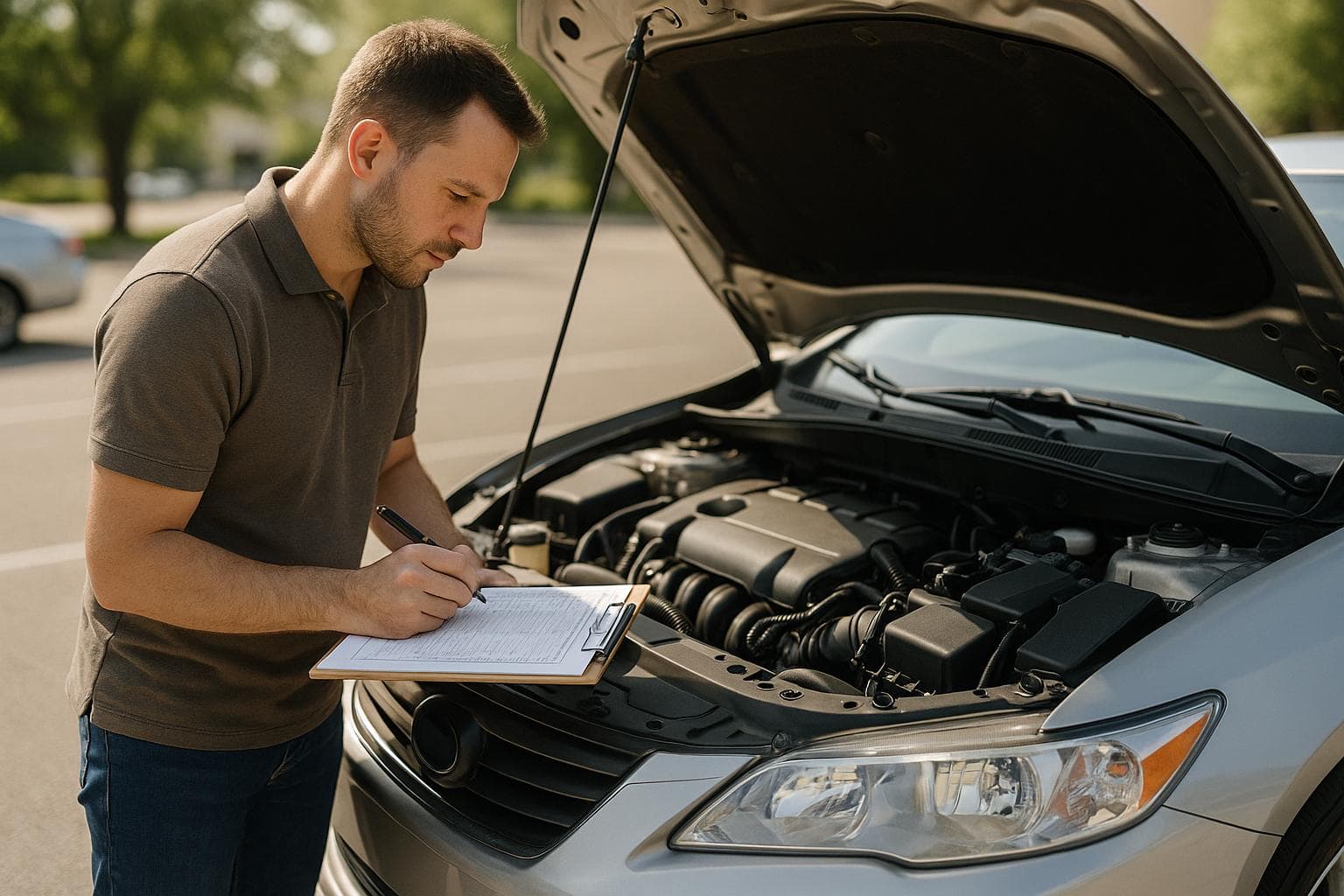
High-mileage cars can be a budget-friendly way to get reliable transportation, but they require careful evaluation to avoid costly mistakes. Here’s what you need to know:
- Benefits: Lower purchase price, reduced insurance premiums, and proven durability if well-maintained.
- Risks: Potential repair costs, shorter lifespan, and unknown maintenance history.
- Key Steps:
- Inspect the Car: Check the engine, transmission, brakes, suspension, and steering for signs of wear or damage.
- Review Maintenance Records: Look for consistent service history, major repairs at key mileage intervals, and resolved recalls.
- Get a Vehicle History Report: Use services like Carfax or AutoCheck to spot accident history, title issues, and previous ownership patterns.
- Choose Reliable Models: Toyota Camry, Honda Accord, and Ford F-150 are examples of vehicles known for lasting beyond 100,000 miles.
- Negotiate Smart: Research market value, factor in future repair costs, and stay firm on the total price.
High Mileage Car Buying Guide | What to Check Before You Buy | OrtoTech Garage

What High Mileage Means
High mileage isn’t just about the number on the odometer – it tells the story of a vehicle’s journey and usage. Here’s what it typically means for drivers in the U.S.
Defining High Mileage in the U.S.
In the United States, a car is often considered to have high mileage once it surpasses 100,000 miles. This benchmark comes from the average driving range of 12,000 to 15,000 miles annually. Vehicles with mileage much higher than this average are likely to have seen heavy use, while significantly lower mileage might suggest extended periods of inactivity.
Factors That Influence a Car’s Lifespan
Mileage is just one piece of the puzzle. A car’s overall condition and how well it has been maintained play equally important roles in determining how long it will last. Regular care and upkeep can often outweigh the impact of a high odometer reading.
How to Check High-Mileage Car Condition
Evaluating a high-mileage car requires a detailed approach to separate a reliable vehicle from a potential money pit. Here’s how you can thoroughly assess its condition and long-term dependability.
Checking Mechanical Parts
A professional inspection is a must for spotting hidden issues that could cost you later. While you can handle some checks yourself, a mechanic’s expertise can uncover problems you might miss.
Start with the engine. Pay attention to how it sounds – knocking, grinding, or other unusual noises could signal trouble. Check the oil; it should be clean and at the right level. Dark, gritty oil or visible metal particles are red flags. Also, inspect the engine bay for leaks, corrosion, or worn-out belts and hoses.
The transmission is another critical component. During a test drive, ensure the transmission shifts smoothly – whether it’s automatic or manual. Jerking, grinding, or a burning smell could indicate serious issues.
Don’t overlook the brakes. Listen for squealing or grinding noises when you brake, and make sure the pedal feels firm and responsive. Check the brake fluid – it should be clear or slightly amber, not dark or dirty.
Finally, examine the suspension and steering. Worn shocks, struts, or steering components can cause uneven tire wear and affect safety. On a test drive, the car should drive straight without pulling to one side, and the steering should feel precise, not loose or unresponsive.
In addition to these checks, maintenance records are invaluable for understanding the car’s history.
Looking at Maintenance Records
Maintenance records tell the story of how well a car has been cared for. They show whether the previous owner kept up with recommended services or neglected key tasks.
Start with oil change records. Regular oil changes at consistent intervals indicate good upkeep. Gaps in service history could suggest neglect.
Look for evidence of major services at key mileage milestones – 30,000, 60,000, 90,000, and 120,000 miles. These typically include tasks like timing belt replacements, coolant flushes, and transmission fluid changes, all crucial for keeping the car running smoothly.
Pay attention to patterns in repairs. If the same issue has been fixed multiple times, it might point to recurring problems or poor-quality previous repairs. On the other hand, detailed repair records can also indicate a proactive owner who addressed issues as they arose.
Check for any warranty work or recall repairs. Make sure all recalls have been resolved, as unresolved recalls could impact safety or reliability.
While maintenance records provide detailed insights, vehicle history reports offer a broader perspective.
Getting Vehicle History Reports
A vehicle history report can reveal things that neither maintenance records nor a visual inspection can. These reports compile data from various sources, including insurance companies and government agencies, to give you a full picture of the car’s past.
In the U.S., Carfax and AutoCheck are the go-to services for these reports. It’s often worth checking both, as each may include details the other misses.
Start by reviewing the accident history. Look for the severity of any accidents and whether airbags were deployed. Minor scrapes are less concerning than major collisions, which could compromise the car’s safety and structural integrity.
Check for title issues. A clean title is ideal, but titles marked as salvage, flood, or lemon can spell trouble. These labels often indicate serious past problems that could affect safety, reliability, or resale value.
Finally, review the service and ownership history. A car with multiple owners in a short time may have underlying issues, while one with consistent ownership and regular maintenance is usually a safer bet.
Best High-Mileage Car Models to Buy
When buying a high-mileage car, it’s not just about the condition – it’s also about picking the right model. Some cars are built to last well beyond 100,000 miles, while others may start showing their age much sooner. Choosing a vehicle known for its durability can save you from frequent repairs and provide years of reliable service. Below, we’ll look at models with a strong reputation for longevity to help you make a confident choice.
Cars That Last Past 100,000 Miles
Certain vehicles have become synonymous with reliability, making them top picks for high-mileage buyers:
- Toyota Camry: Known for its reliability and easy access to replacement parts.
- Honda Accord: Simple yet effective engineering that supports a long service life.
- Ford F-150: Built tough, offering dependable performance even at higher mileage.
- Honda Civic: A low-maintenance option with a reputation for consistent reliability.
- Toyota Prius: A fuel-efficient hybrid that remains dependable when properly maintained.
- Subaru Outback: Durable and equipped with all-wheel drive, making it a solid choice for various terrains.
Why Brand Reputation Matters
Toyota and Honda consistently stand out for their focus on quality, reliability, and strong service networks. Their rigorous quality control ensures fewer surprises when it comes to repairs, while their widespread availability of parts helps keep maintenance costs in check. Additionally, these brands tend to retain higher resale values, making them a smarter long-term investment for buyers looking for dependable transportation.
Why to Avoid High-Mileage Luxury Cars
Luxury cars often come with a different set of challenges as they age. High-mileage luxury models typically require expensive repairs due to their advanced features and specialized components. Maintenance costs can quickly add up, especially when dealing with proprietary technologies or harder-to-find parts. For those prioritizing affordability and reliability, sticking with mainstream brands is usually the more practical route.
sbb-itb-2f27312
How to Price and Negotiate High-Mileage Cars
Having a solid negotiation strategy – based on accurate market research and a clear understanding of future repair costs – can help you save a significant amount of money.
Finding the Right Market Price
Before reaching out to sellers, do your homework to determine the car’s market value. Use trusted resources like Kelley Blue Book, Edmunds, Consumer Reports, TrueCar, Cargurus, and CarEdge to get a well-rounded view of the car’s worth. Comparing prices from different dealerships and online listings will also give you insight into local market trends.
Check the vehicle’s history report through services like Carfax, AutoCheck, or NMVTIS. These reports can reveal past issues – such as accidents or title concerns – that you can use as leverage to negotiate a lower price.
For extra peace of mind, consider paying for a pre-purchase inspection by an independent mechanic. While this service typically costs $100 to $200, it can uncover hidden problems, like engine or brake issues, that could justify a significant price reduction.
Use all this information to strengthen your negotiating position, especially when it comes to the car’s mileage.
How to Negotiate Based on Mileage
Mileage is one of the most effective tools in your negotiation arsenal when paired with thorough market research. For instance, a car with 60,000 miles will generally be worth less than one with only 15,000 miles, even if the price difference isn’t immediately obvious. Always focus on negotiating the total price rather than getting sidetracked by monthly payments. For example, if a dealer offers $320 per month over 60 months (totaling $19,200), ensure they’re not merely extending the loan term to make the payments seem more affordable without lowering the overall cost.
Securing pre-approved financing before visiting the dealership can also work to your advantage. It sets your budget and interest rate upfront, giving you more control during negotiations. For example, negotiating the interest rate on a $25,000 loan could save you as much as $3,400 over the loan’s lifetime.
If you’re paying cash, keep that detail to yourself until the final price is settled. Revealing it too soon might prompt the dealer to steer you toward financing options that benefit them more than you.
If you plan to trade in a vehicle, research its value beforehand using platforms like Carvana or Carmax. Treat the trade-in negotiation as a separate transaction from the purchase of your high-mileage car to avoid getting shortchanged on either deal.
Throughout the process, stay polite but firm. Let the dealer know you’re exploring other options, which signals that you’re not in a rush and strengthens your bargaining power.
Planning for Future Repair Costs
When budgeting for a high-mileage car, don’t forget to account for future repair expenses. These vehicles often need more maintenance, so it might be worth considering an extended warranty – especially for older models or those with a history of reliability issues. Dealers may offer discounts on extended warranties; in some cases, you can negotiate up to 30% off the asking price or secure a minimum $1,200 reduction on in-house service plans.
Be cautious with add-ons and fees. Push back on any charges that go beyond the standard vehicle price, documentation fee, registration, and taxes.
Before signing anything, ensure every detail is documented in writing. This includes the agreed-upon price, any promised repairs, warranty terms, and financing arrangements. If the deal doesn’t fit your budget or adequately address future repair needs, don’t hesitate to walk away. Sometimes, the best negotiation tactic is knowing when to move on.
Tools and Resources for Smart Car Buying
Finding the right tools and resources can make purchasing a high-mileage car much simpler and less stressful. When it comes to older vehicles with higher mileage, having access to trustworthy information and expert advice is crucial. These resources work hand-in-hand with your initial research to help you make a confident decision.
Frostbyte Motors Services

Frostbyte Motors takes the guesswork out of buying high-mileage vehicles by offering personalized and transparent services. Since 2008, this BBB A-rated dealership has been a trusted partner for families and military personnel in El Paso County, helping them navigate the unique challenges of used car purchases.
Their process is tailored to address the specific concerns of high-mileage car buyers. Every vehicle – whether it’s a car, truck, or SUV – undergoes a rigorous inspection, complete with detailed condition reports and extensive vehicle history information. With upfront pricing, you won’t have to worry about haggling or hidden costs, making the process more straightforward.
When it comes to financing, Frostbyte Motors offers a significant advantage. High-mileage vehicles can sometimes be tricky to finance through traditional lenders, but their experienced finance team, with over 30 years of expertise, works with multiple credit unions and more than 15 lenders to secure competitive rates. Many buyers even receive same-day approval.
"Great service, willing to work with us on price and trade in value", says customer Shae D.
Military families stationed at Fort Carson and Peterson Space Force Base can also take advantage of specialized financing programs designed to accommodate their unique needs. With years of experience working with military personnel, the dealership understands the challenges of deployment schedules, PCS moves, and other factors that impact car buying decisions.
For added convenience, their "Explore My Payment" calculator allows you to review financing options and get pre-qualified before stepping onto the lot, giving you more control during the negotiation process.
"Shane found us a perfect vehicle at a great price. He also was very good at working with us on the financing end of the process", shares customer Richard R.
Frostbyte Motors doesn’t stop at the sale. They offer fair trade-in appraisals and access to their Frostbyte Motors Auto Care facility for ongoing maintenance – especially important for keeping high-mileage vehicles running smoothly. This full-service approach supports your earlier efforts to evaluate a vehicle’s condition, creating a seamless and reliable buying experience.
"No pressure sales team, very nice to work with", highlights customer Anthony W.
Conclusion: Making the Right High-Mileage Car Purchase
Buying a high-mileage car can be a smart choice when approached thoughtfully. As we’ve seen, a carefully maintained car with 120,000 miles can often outperform a poorly cared-for vehicle with just 80,000 miles. It’s all about how you evaluate the car and the steps you take to ensure you’re making a sound investment.
Start by focusing on models known for their reliability and durability. Cars like the Toyota Camry and Honda Accord are excellent examples, consistently proving their ability to go the distance. For buyers looking for dependable transportation without breaking the bank, these vehicles are often a safe bet.
A thorough mechanical inspection, a detailed review of maintenance records, and a vehicle history report are essential tools in your decision-making process. These steps help you uncover potential issues and give you the confidence to negotiate a price that accounts for any upcoming repairs or maintenance.
For added peace of mind, consider working with expert resources like Frostbyte Motors. Their services, backed by a BBB A rating, include detailed vehicle inspections, transparent pricing, tailored financing options, and support for ongoing maintenance. This kind of expertise can simplify the process and help you navigate the unique aspects of purchasing a high-mileage car.
With the right preparation, trusted resources, and a careful evaluation process, a high-mileage car can provide years of reliable service. The key is to make decisions based on solid facts, not assumptions, ensuring the car meets your specific needs and budget.
FAQs
What should I look for when inspecting a high-mileage car to ensure it’s a smart buy?
When evaluating a high-mileage car, start by assessing its overall condition and checking for signs of consistent care. Pay close attention to key components like the engine, transmission, and suspension, looking for any signs of wear or damage. Don’t skip over the basics – inspect the tires, brakes, and lights to ensure they’re in good working order. Also, check that all fluids – oil, coolant, brake fluid, and transmission fluid – are clean and at the correct levels.
A detailed maintenance history can provide valuable insight into how well the vehicle has been cared for. Regular servicing records are often a good indicator of reliability. On the exterior, look for rust, dents, or mismatched paint, which may hint at past repairs. Inside the car, check for excessive wear and tear, and be alert for dashboard warning lights that could signal deeper problems. Taking the time to evaluate these factors thoroughly can help you make a more confident and informed decision.
What should I look for in a vehicle history report when buying a high-mileage car?
When examining a vehicle history report for a high-mileage car, start with the odometer readings. Make sure the recorded mileage matches up with service records and previous sales. If there are any inconsistencies, it could be a sign of odometer tampering – something you definitely want to avoid.
Next, review the car’s accident history. This section can uncover any past damage that might impact the car’s reliability or performance down the road. Even if repairs were made, prior accidents can sometimes lead to lingering issues.
Don’t overlook title details either. Watch out for salvage or flood titles, as these often point to serious past problems that could come back to haunt you. Finally, check the maintenance history. A record of consistent servicing is a good sign, while recurring mechanical problems might indicate trouble ahead. These insights can help you steer clear of potential pitfalls and make a smarter choice when buying a high-mileage vehicle.
Why is it often smarter to choose mainstream car brands instead of luxury brands when buying high-mileage vehicles?
When you’re considering a high-mileage vehicle, sticking with well-known brands like Toyota, Honda, or Subaru is often a wise move. These manufacturers have built a reputation for producing cars that are not only dependable but also relatively inexpensive to maintain. Over the years, their vehicles tend to stay mechanically sound, which is a big plus for buyers trying to keep costs in check.
In contrast, luxury brands like BMW or Mercedes-Benz can be a different story. While they may offer premium features and a smoother ride, the cost of repairs and maintenance – especially once the warranty period ends – can add up quickly. These higher expenses can easily outweigh any savings you might get from a lower purchase price, making high-mileage luxury cars a tougher sell for those watching their budget.